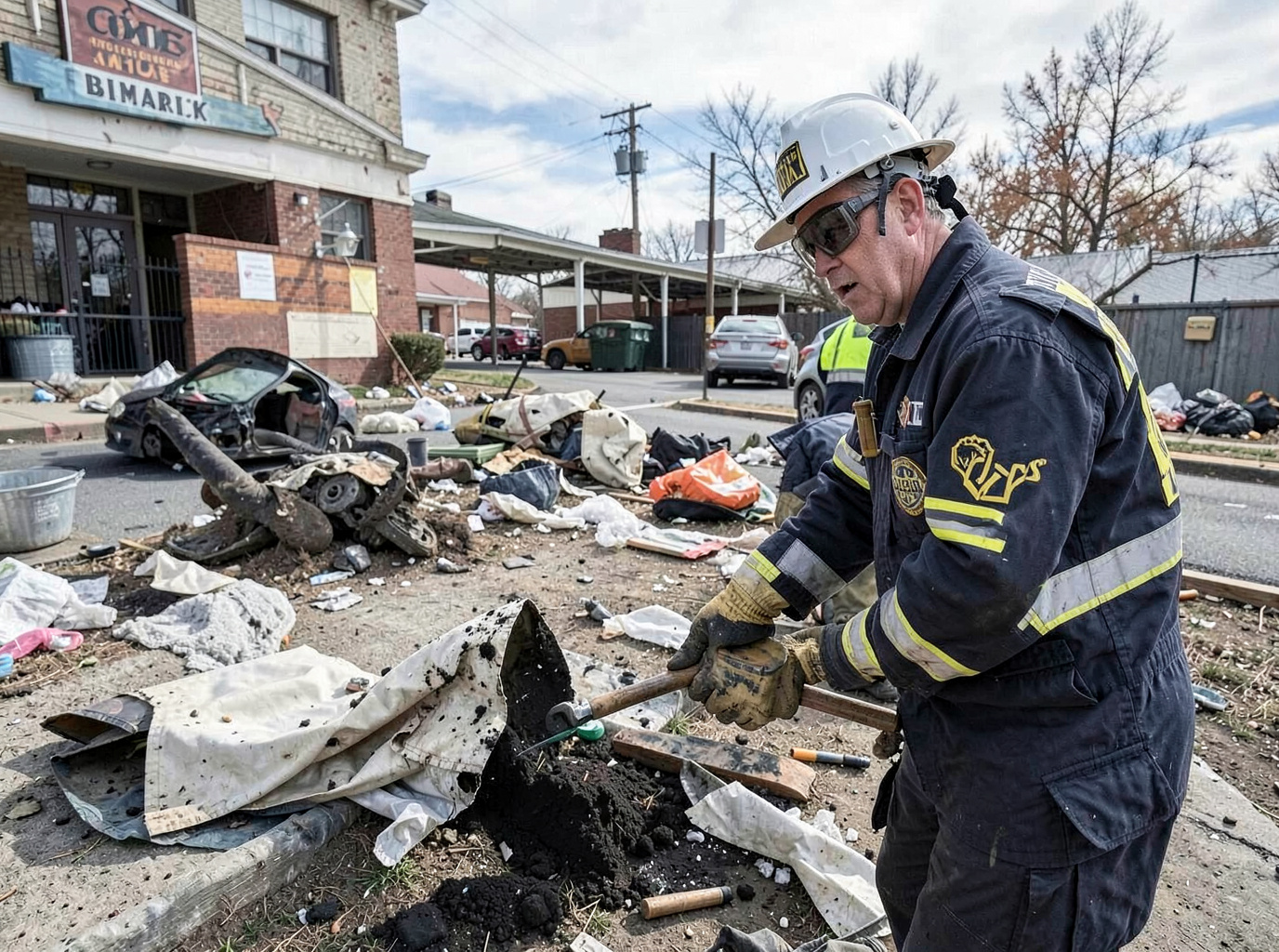
Trauma scenes in Bismarck often involve older single-family homes built before 1970 that feature narrow hallways, finished basements, and hardwood floors laid directly on joists. These details matter because blood and fluids migrate quickly through gaps and into subfloors, especially after summer storms push moisture through foundations. Crews must cut and remove sections of flooring rather than relying on surface cleaning alone, then treat joists with hospital-grade disinfectants rated for porous materials. Cold winter temperatures slow odor development but can freeze fluids, making them harder to detect until thaw.
Severe storms common to the humid continental climate frequently damage roofs or windows, allowing rainwater to mix with biohazards and carry contaminants into wall cavities. In these cases technicians use moisture meters and borescopes to map spread before any demolition begins. All waste leaves the site in labeled, DOT-compliant containers routed through permitted St. Francois County disposal facilities. Homeowners receive a written chain-of-custody record and photos of every removed section.
Air handling systems in local ranch-style homes often pull odors from affected rooms into ducts. Restoration includes negative-air machines with HEPA and activated carbon filtration run for a minimum of 48 hours, followed by swab testing on surfaces and HVAC registers. Work stops only after independent lab results confirm no detectable pathogens remain above regulatory thresholds.
Unattended death scenes require extra attention to insect activity and pet waste that can compound contamination. Technicians wear powered air-purifying respirators during initial entry and establish containment zones using 6-mil poly sheeting sealed at doorways. This prevents cross-contamination into unaffected living areas common in compact Bismarck floor plans.
Technician insight
In Bismarck the thing that catches most people out with Trauma Scene Cleanup is how frequent severe storms push rainwater into crawl spaces of older St. Francois County homes, carrying fluids under floor joists that sit right on the dirt. Homeowners often miss the spread until the odor returns weeks later.
Trauma Scene After Storm Damage
A residence in Bismarck experienced a traumatic incident during a summer storm that also damaged the roof. Fluids had migrated through saturated subflooring into the crawl space common under local older homes. We contained the area, removed affected joists and insulation, treated the remaining structure, and ran negative air until clearance. The family returned without residual odor or health concerns.
Trauma Scene Cleanup Services We Offer
✓Blood and Fluid Remediation
Targeted removal of dried and liquid blood from floors, walls, and furnishings followed by EPA-registered disinfection to eliminate pathogens.
✓Unattended Death Scene Restoration
Full decontamination of rooms after prolonged decomposition, including subfloor treatment and odor source elimination in older St. Francois County homes.
✓Odor Neutralization
Source removal plus hydroxyl and ozone treatment to permanently eliminate decomposition and bodily fluid smells that linger in humid summer conditions.
✓Biohazard Waste Disposal
Segregation, packaging, and transport of regulated medical waste to permitted facilities serving Bismarck and surrounding counties.
✓Structural Decontamination
Removal of affected drywall, insulation, and flooring plus treatment of framing members exposed during storm-related water intrusion events.
✓HVAC and Duct Sanitization
Negative-air cleaning and antimicrobial fogging of ductwork to stop cross-contamination of odors and particles throughout the property.
How it works
- 1
Scene Assessment
Technician arrives within hours, documents visible contamination, maps migration paths through local construction types, and notes any storm damage.
- 2
Containment Setup
Poly barriers and negative air are installed to isolate the affected zone from the rest of the Bismarck residence.
- 3
Removal and Disposal
Contaminated materials are cut out, double-bagged, and transported for compliant disposal while surfaces receive initial disinfectant application.
- 4
Deep Cleaning and Verification
Porous and non-porous surfaces are cleaned, treated, and tested; HVAC is sanitized and final clearance is confirmed before barriers come down.
Pricing
Pricing varies by scene size, materials affected, and any storm-related water intrusion; we provide a written quote after on-site assessment.